My big brother Peter had ginger hair, just like me. He had a drum kit. He played in a jazz band and he went to art school. He gave me a straw hat for my fourth birthday. This is the family photo taken on that occasion.
Peter was the oldest and I was the youngest. He carried me home from the nursing home where I was born. Dad was working so Peter went to collect Mum and we came home together in a taxi. Mum always talked about the journey home - it was a picture she kept in her mind's eye until the end. Peter remembered it too and so from their shared memory I imagined it and from this a special bond grew.
I felt connected by this imagined memory to the art student brother who moved out into a new and unknown world. He left our mundane life behind. That is what happens when birds fly from the nest. This is the order of things. The door was open for me to follow but I did not accept the place at art school that was offered. I chose my own path but in the end it led to the same place.
Peter became a performer, a designer, a teacher, a wanderer and a man of many homes. I was a stage manager, an organiser, a teacher, I am a perpetual traveller with my heart in many homes. Like my big brother I don't know where I want to be. But I am still in this world and once more he has moved on.
Monday, 24 November 2014
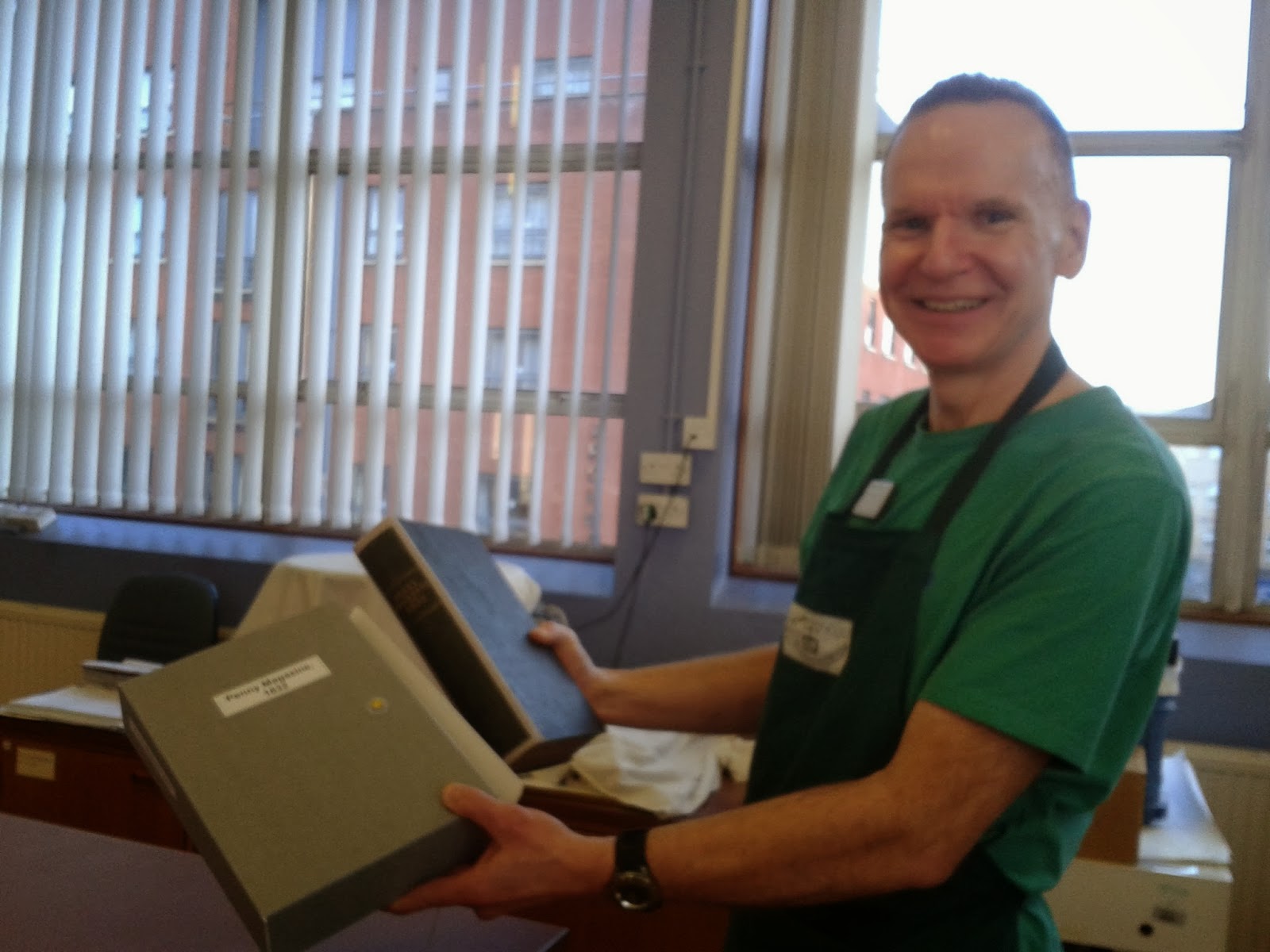
Penny Magazine 1832
It is not Penny's Magazine. It is, or was, my great, great Grandfather's book. The inscription inside the front cover reads
"This book is the property of George William Rea, left to him by his Grandfather Thomas George, son of Squire Henery (sic) George of Blaenavon, April 5th 1937. Signed M. T. Rea, mother of G.W. Rea."
Thursday, 24 July 2014
With Love from Me to You
In the summer of 1965 my sister's Canadian penfriend visited us in our London home on her way home from a year in Paris. Beth doesn't recall the visit, the memory blocked out maybe by the bereavement that was to follow, but I remember it. I was ten years old. Beth was tall, slim, elegant with stylish short hair and she was a Beatlemaniac. How do I know this fact? Because she signed my autograph book and for years and years I tried to imagine this quiet polite girl whom I literally looked up to, amongst the screaming hoards of teenagers I saw on the TV. My mother would muse from time to time "I wonder what became of that nice Canadian girl".
My sister Barbara, or Babs as we called her, died the following summer after a long battle with congenital heart disease, and Beth's letters remained sealed in a brown paper bag labelled Beth's letters to me. They were precious gifts that brought the outside world to the bedside of a child who had been in and out of hospital for years. When Beth tracked us down over forty years later she sent me more than a hundred pages of my sister's handwritten letters and I was so pleased to dispatch the brown paper bag with its treasured contents in return. I expect I have already told this story, but it is worth telling twice.
Now, in 2914, Beth has published a captivating memoir of that life-changing year in Paris - memorable not least because she saw the Beatles play live not once, but twice. Unlike most of us, Beth has kept her teenage diaries and is not afraid to share her secret thoughts including the early days of her passionate and life-long love affair with Paul McCartney - if only he knew what he has missed.
Now a seasoned actress, a teacher of memoir writing, mother and glamorous grandma, she is a penfriend to all who care to share in her daily thoughts, family life and adventures. She has written a fascinating book about her great grandfather and published a book of the blog covering the last few years including a trip around 21st century Liverpool with my own children.
So proud am I to have sat in Beth's Toronto garden and taken part in an inspiring writing class. Now, back in England, we are setting up our own writing group - Writing History. If you were ever a teenager, if you adored the Beatles and loved France then please borrow my copy of her brilliant book. Or better still buy your own copy: http://bethkaplan.ca/book.html
Wednesday, 22 January 2014
Catching up with Christmas
Okay, so I am only just catching up with Christmas. But it is still January, the snow hasn't yet arrived and the Poinsetta still survives - so I'm not doing that badly. I can even just about remember my new year's resolutions - something about being organised, motivated, solvent and getting educated.
Lots of exciting stuff ahead - Tour de France is coming up and over Wincobank Hill in July so we are cooking up a fun weekend. I am writing a funding bid for the Chapel Heritage Centre and planning a joint project with Sheffield Cathedral in November. That's just in my spare time. To pay the bills I am going to be spending time out in the woods with children and in the countryside with families.
Then - there is family stuff - Friday is still Granny Day and I often get to see my little family together as they are conveniently all now in Liverpool although not normally in the same house. It looks like I will be also paying a few visits to my big bro's new Kentish abode. My amazing big sister, who nearly died 15 years ago, is celebrating a special birthday ending in 0 and next month we are going away together for a little weekend in Norfolk. As for that other brother, the fit one that keeps cycling up mountains - well he has already booked in for TdF in July. So what with a few trips up north, over west and down south, it should be another interesting year. So if you want to keep up with just enter your email address in the box at the top of this page and you will get a message in your inbox when I update. Think of it as a supplementary postcard - you might even get one with a stamp as well - I still do those. And by the way - thanks for all the Christmas cards and emailed greetings. I will be in touch to try and see people this year.
Monday, 16 December 2013
Bethlehem
A seasonal picture for this time of year.
This little water-colour of Bethlehem was painted in an exercise book nearly 200 years ago by 15 year old Catherine Read who used to live in Wincobank Hall, just across the road to where I live now. Maybe Catherine copied another picture drawn by one of the many well-travelled visitors to her home. Or maybe her grandfather brought back a decorated souvenir with a landscape scene. His 18th century passport, lodged in the Sheffield Archive, is a glorious colour parchment stamped and sealed in countries across the world.
Catherine's parents, John and Elizabeth Read, were energetic campaigners for social justice and religious freedom. With missionary zeal they supported campaigns to to improve the lot of the poor and they supported the Sunday School movement so that children could learn to read the Bible for themselves. But John Read died a broken man, shamed by potential bankruptcy, having bailed out his father-in-law whose iron-works had failed due to the recession following the Napoleonic Wars. His debts were cleared by his eldest daughter Mary Anne, who had married well, but been widowed early. She bought the Hall and moved back home with her baby daughter to live with her mother and sisters. Together these women were a formidable force for change.
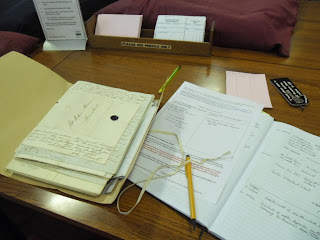
Earlier this year I spent days and days leafing through piles of hand written documents, old notebooks and letters, account books and wills trying to piece together the story of this extraordinary family. Catherine never married. Instead, she spent her life looking after her sister Eliza's children, many of whom were frail and died young, along with their delicate mother.
Mary Anne, a woman ahead of her time, became well known as editor of collections of persuasive poetry and prose, essentially social propaganda. Her most notable cause was the universal abolition of slavery and in 1841 she was at the inaugural meeting of what is now Anti-Slavery International. Emily Read ran the village school at the chapel, provided hands on help and was well loved by the local families. Two of Eliza's son's survived to found the Wilson dynasty and their children went on to become Liberal and Labour politicians, continuing to campaign for improved social conditions. And all the time in the background, the fortunes of the family firm The Sheffield Smelting Company, waxed and waned with all the precariousness experienced by today's financial institutions.
Sheffield's industrial heritage owes all to the courage of the entrepreneurs who built the businesses from nothing. reinvesting their profits without a safety net, and to the workforce who invested their lives and their health. As a city, Sheffield is shaped by allegiance to the parliamentary cause dating back to the Civil War, non-conformist radical religion and the commitment of the great philanthropists of the Industrial Revolution.
There is a great story here that brings alive all that dry and dusty Victorian legislation I learned about at school, in those history lessons that were awash with dates and Prime Ministers but told nothing of the people. This is a story I want to get back into. In between everything else. And Christmas.
More of the Wincobank story is here http://upperwincobankchapel.wordpress.com/about/
The rest is in archives around the world.
This little water-colour of Bethlehem was painted in an exercise book nearly 200 years ago by 15 year old Catherine Read who used to live in Wincobank Hall, just across the road to where I live now. Maybe Catherine copied another picture drawn by one of the many well-travelled visitors to her home. Or maybe her grandfather brought back a decorated souvenir with a landscape scene. His 18th century passport, lodged in the Sheffield Archive, is a glorious colour parchment stamped and sealed in countries across the world.
Catherine's parents, John and Elizabeth Read, were energetic campaigners for social justice and religious freedom. With missionary zeal they supported campaigns to to improve the lot of the poor and they supported the Sunday School movement so that children could learn to read the Bible for themselves. But John Read died a broken man, shamed by potential bankruptcy, having bailed out his father-in-law whose iron-works had failed due to the recession following the Napoleonic Wars. His debts were cleared by his eldest daughter Mary Anne, who had married well, but been widowed early. She bought the Hall and moved back home with her baby daughter to live with her mother and sisters. Together these women were a formidable force for change.
Mary Anne, a woman ahead of her time, became well known as editor of collections of persuasive poetry and prose, essentially social propaganda. Her most notable cause was the universal abolition of slavery and in 1841 she was at the inaugural meeting of what is now Anti-Slavery International. Emily Read ran the village school at the chapel, provided hands on help and was well loved by the local families. Two of Eliza's son's survived to found the Wilson dynasty and their children went on to become Liberal and Labour politicians, continuing to campaign for improved social conditions. And all the time in the background, the fortunes of the family firm The Sheffield Smelting Company, waxed and waned with all the precariousness experienced by today's financial institutions.
Sheffield's industrial heritage owes all to the courage of the entrepreneurs who built the businesses from nothing. reinvesting their profits without a safety net, and to the workforce who invested their lives and their health. As a city, Sheffield is shaped by allegiance to the parliamentary cause dating back to the Civil War, non-conformist radical religion and the commitment of the great philanthropists of the Industrial Revolution.
There is a great story here that brings alive all that dry and dusty Victorian legislation I learned about at school, in those history lessons that were awash with dates and Prime Ministers but told nothing of the people. This is a story I want to get back into. In between everything else. And Christmas.
More of the Wincobank story is here http://upperwincobankchapel.wordpress.com/about/
The rest is in archives around the world.
Monday, 26 August 2013
From one Bank Holiday to Another
![]() |
| Shelly, Ed & Freddie Ford 4 May 2013 |
![]() |
| 5 Wards & 2 Fords |
![]() |
| Rea Smiths & Co |
Wednesday, 21 August 2013
Fast Freddie
Freddie zoomed into the world 10 weeks early, in a hurry just like his dad always was. Ed never hangs about. When he lived with us in Newcastle, we had to be on our toes to keep up with him. So much energy. None of the Rea Smith prevarication and contemplation of options which sometimes goes on for years. When Ed has an idea he makes a decision and if he's going to do it, he does it. Ed wanted his own company - and he has it: All Lovely Stuff And so with Freddie. When he thought it was time, out he came, into the world, taking all by surprise especially his lovely mum, Shelly.
This gorgeous little man is definitely the son of his parents - blonde, smiling and wide-eyed about the world around him. And growing up so fast. I can just imagine a family day out with Lizzy and Freddie at Lightwater Valley, just like when the Ward brothers would come to stay and we used to pack up a a picnic to eat in the rain inbetween swooshing down the hellslide, careering round the skatecart track and scrambling up the spiders web.
Now, Great Aunt Penelope is really looking forward to our family get together in October, to see how the next generation is doing.
This gorgeous little man is definitely the son of his parents - blonde, smiling and wide-eyed about the world around him. And growing up so fast. I can just imagine a family day out with Lizzy and Freddie at Lightwater Valley, just like when the Ward brothers would come to stay and we used to pack up a a picnic to eat in the rain inbetween swooshing down the hellslide, careering round the skatecart track and scrambling up the spiders web.
Now, Great Aunt Penelope is really looking forward to our family get together in October, to see how the next generation is doing.
Subscribe to:
Posts (Atom)